Enerpac Tool Group Acquires SFE Group for $472 Million: Industrial Equipment M&A
Enerpac Tool Group Corp. has agreed to acquire Specialized Fabrication Equipment Group LLC (SFE Group) for approximately $472 million in cash from SFEG Holdings, Inc. and Gladstone Investment Corporation. SFE Group is a 12-brand platform serving critical sectors including aerospace and defense, biopharma, oil and gas, energy, semiconductors, maritime, mining, data centers, and hospitals. The transaction expands Enerpac's addressable market by approximately $1 billion and advances its pure-play industrial tools and solutions strategy.
Enerpac Tool Group Acquires SFE Group for $472 Million: Industrial Equipment M&A
Transaction Overview
Enerpac Tool Group Corp. (NYSE: EPAC) has agreed to acquire Specialized Fabrication Equipment Group LLC (SFE Group) for approximately $472 million in cash from SFEG Holdings, Inc. and Gladstone Investment Corporation (NASDAQ: GAIN). The transaction is expected to close in Enerpac's first fiscal quarter of 2027, subject to regulatory approvals and customary closing conditions.
SFE Group generated approximately $170 million in revenue and $44 million in adjusted EBITDA over the trailing twelve months, implying a transaction multiple of approximately 10.7x EBITDA. Enerpac will fund the acquisition through cash on hand and its expanded credit facilities. Post-closing net leverage is expected to be approximately 2.8x adjusted EBITDA.
The acquisition is expected to expand Enerpac's total addressable market by approximately $1 billion and is immediately accretive to adjusted EPS.
The Target: SFE Group
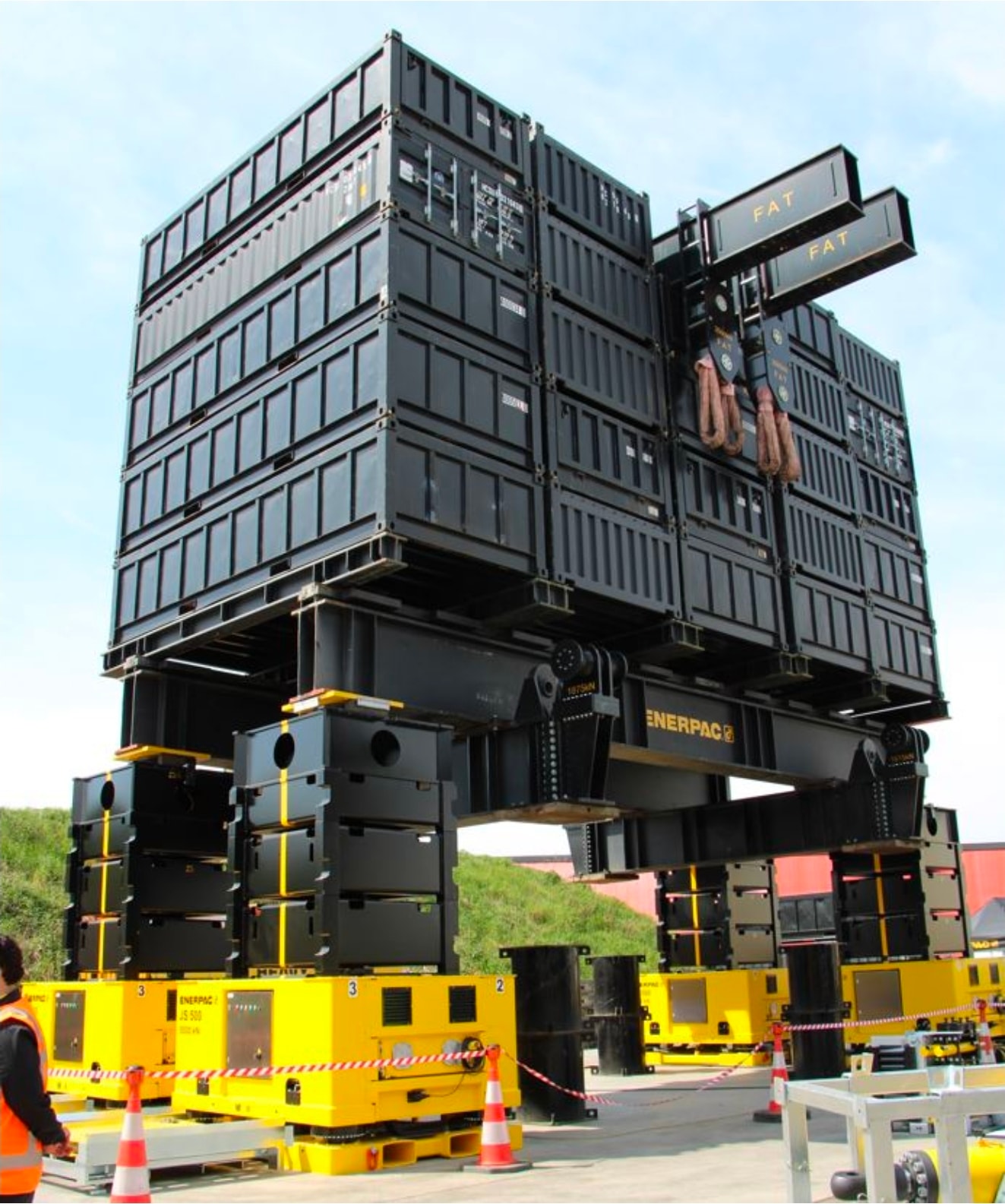
SFE Group is a multi-brand industrial equipment platform specializing in portable machining, welding, pipe fabrication, and maintenance tools for heavy industrial applications. The company operates through 12 proprietary brands, each with established market positions in specific product categories and end markets.
Core product capabilities. SFE Group's product portfolio spans:
- Portable machining equipment — field machining tools for on-site maintenance, repair, and fabrication of large industrial components including flanges, pipe ends, heat exchanger tube sheets, and pressure vessel nozzles
- Welding and cutting equipment — specialized welding positioners, manipulators, and automated welding systems for pipe fabrication and structural applications
- Pipe fabrication equipment — cold cutting, beveling, and end-preparation tools for pipeline construction, maintenance, and repair
- Maintenance and inspection tools — portable equipment for in-situ machining, alignment, and inspection of rotating equipment, valves, and structural components
End market diversification. SFE Group's 12-brand platform serves a deliberately diversified set of critical end markets:
- Aerospace and defense — precision machining and fabrication tools for aircraft maintenance, military equipment repair, and defense manufacturing
- Biopharma — hygienic fabrication and maintenance equipment for pharmaceutical and biotechnology manufacturing facilities
- Oil and gas — pipeline construction, maintenance, and repair tools for upstream, midstream, and downstream applications
- Energy — power generation maintenance equipment for nuclear, fossil fuel, and renewable energy facilities
- Semiconductors — precision fabrication tools for semiconductor fab construction and maintenance
- Maritime — ship repair and maintenance equipment for naval and commercial shipyards
- Mining — heavy equipment maintenance tools for surface and underground mining operations
- Data centers — infrastructure installation and maintenance equipment for hyperscale and enterprise data center construction
- Hospitals — maintenance and repair tools for healthcare facility infrastructure
This end market diversification reduces SFE Group's exposure to any single sector's cyclicality and positions the platform to benefit from multiple concurrent infrastructure investment themes — AI data center build-out, energy transition, defense modernization, and pharmaceutical manufacturing reshoring.
Strategic Rationale: Pure-Play Industrial Tools Platform
Enerpac's strategic focus. Enerpac Tool Group is a global manufacturer of high-force tools and equipment — hydraulic torque wrenches, hydraulic cylinders, lifting systems, and related products — used in heavy industrial maintenance, construction, and infrastructure applications. The company has pursued a deliberate strategy of divesting non-core businesses and concentrating on its core industrial tools and solutions platform.
The acquisition of SFE Group advances this strategy by adding a complementary set of portable machining, welding, and fabrication capabilities that serve the same heavy industrial customer base as Enerpac's existing product lines. The combined platform can offer customers a broader range of tools for industrial maintenance and construction applications, increasing Enerpac's share of wallet with existing customers and opening new customer relationships.
Addressable market expansion. Enerpac estimates that the SFE Group acquisition expands its total addressable market by approximately $1 billion. This expansion reflects both the new product categories SFE Group brings to the platform and the new end markets — particularly biopharma, semiconductors, and data centers — where SFE Group has established positions that Enerpac did not previously serve.
Gladstone Investment exit. Gladstone Investment Corporation is a business development company (BDC) that provides debt and equity capital to lower middle market companies. Gladstone's exit from SFE Group through the Enerpac acquisition represents a successful realization of its investment and is consistent with the BDC model of providing growth capital to companies that are ultimately acquired by strategic buyers.
M&A Structure: All-Cash Acquisition
The all-cash structure of the Enerpac/SFE Group transaction simplifies the consideration mechanics relative to cash-and-stock transactions but raises its own set of legal and financial considerations:
Financing and leverage. Enerpac will fund the $472 million purchase price through a combination of cash on hand and expanded credit facilities. The post-closing net leverage ratio of approximately 2.8x adjusted EBITDA is within the range that investment-grade industrial companies typically maintain, though it represents a meaningful increase from Enerpac's pre-acquisition leverage profile. Enerpac's credit agreement covenants — including leverage ratio maintenance tests — must be reviewed to confirm that the post-closing leverage level is within permitted limits.
Gladstone Investment's BDC structure. Gladstone Investment Corporation is a publicly traded BDC regulated under the Investment Company Act of 1940. BDCs are required to distribute substantially all of their investment income to shareholders and are subject to leverage limitations. The sale of SFE Group will generate a significant realized gain for Gladstone, which must be distributed to Gladstone shareholders in accordance with BDC distribution requirements. This creates a defined timeline for Gladstone's receipt and distribution of sale proceeds that may affect the transaction's closing mechanics.
SFEG Holdings structure. The seller of record is SFEG Holdings, Inc. — the holding company through which Gladstone Investment and other investors hold their SFE Group interests. The acquisition of SFEG Holdings (rather than SFE Group's operating entities directly) is a stock purchase structure, which means Enerpac acquires all of SFEG Holdings' assets and liabilities, including any contingent liabilities not identified during due diligence. This makes comprehensive representations and warranties, backed by RWI coverage, particularly important.
Regulatory Approval: Antitrust and Export Controls
HSR antitrust. At $472 million, the transaction exceeds the HSR Act filing threshold and requires pre-merger notification. The antitrust risk profile is moderate. Enerpac and SFE Group have some product overlap in industrial tools and equipment, but their core product lines are largely complementary. The combined entity's market share in any relevant antitrust market is unlikely to raise competitive concerns, though the DOJ or FTC may request additional information about specific product overlaps.
Export controls — a critical issue. SFE Group's customer base includes aerospace and defense, semiconductor, and maritime customers that are subject to U.S. export control regulations — primarily the Export Administration Regulations (EAR) administered by the Commerce Department's Bureau of Industry and Security (BIS) and the International Traffic in Arms Regulations (ITAR) administered by the State Department's Directorate of Defense Trade Controls (DDTC).
Key export control due diligence issues include:
- ITAR-controlled products. If any of SFE Group's 12 brands manufacture or sell products that are controlled under the U.S. Munitions List (USML), those products are subject to ITAR licensing requirements for export, re-export, and transfer. A change of control of an ITAR-registered company requires notification to DDTC and may require a new registration.
- EAR-controlled products. Products with Export Control Classification Numbers (ECCNs) on the Commerce Control List (CCL) require export licenses for certain destinations and end uses. Due diligence must confirm that SFE Group's export compliance program is adequate and that no unlicensed exports have occurred.
- Deemed export issues. Sharing controlled technology with foreign nationals — including employees, contractors, or customers — is treated as an export under EAR and ITAR. SFE Group's workforce and customer base must be reviewed for deemed export compliance.
For Turkish companies and investors evaluating U.S. industrial equipment acquisitions, export control compliance is a particularly sensitive issue. Turkish entities are subject to U.S. export control scrutiny, and any acquisition of a U.S. company with ITAR or EAR-controlled products requires careful analysis of the foreign ownership, control, and influence (FOCI) implications.
Key Legal Issues in Industrial Equipment M&A
Multi-Brand Portfolio Due Diligence
SFE Group's 12-brand structure requires brand-by-brand due diligence across several dimensions:
Intellectual property. Each brand's product portfolio is supported by patents, trademarks, trade secrets, and proprietary manufacturing know-how. IP due diligence must confirm that SFE Group owns or has valid licenses to all IP used in its products, that key patents are not expiring imminently, and that no third-party IP infringement claims are pending or threatened.
Product liability. Industrial tools and equipment used in heavy industrial applications carry inherent product liability risk. SFE Group's product liability insurance history, claims experience, and pending litigation must be reviewed. Products used in aerospace, defense, and nuclear applications are subject to particularly stringent product liability standards.
Customer concentration. A 12-brand platform serving nine end markets should have reasonable customer diversification, but individual brands may have significant customer concentration. Loss of a key customer relationship post-closing — particularly in aerospace/defense or semiconductor, where qualification processes are lengthy — could materially impair the value of the affected brand.
Manufacturing Facilities and Asset-Heavy Due Diligence
SFE Group's business is asset-heavy — manufacturing facilities, specialized tooling and equipment, and inventory are core to its operations. Asset-heavy due diligence includes:
- Real property. Owned and leased manufacturing facilities must be reviewed for title, environmental conditions, zoning compliance, and lease assignment restrictions.
- Equipment and tooling. Manufacturing equipment must be assessed for condition, remaining useful life, and capital expenditure requirements.
- Inventory. Work-in-process and finished goods inventory must be valued and assessed for obsolescence, particularly for products with long manufacturing cycles or specialized applications.
Debt Covenant Compliance
Enerpac's post-closing leverage of approximately 2.8x adjusted EBITDA requires careful attention to credit agreement covenant compliance. Key covenants to monitor include:
- Leverage ratio maintenance tests — typically requiring net debt/EBITDA to remain below a specified maximum (often 3.5–4.0x for investment-grade industrial companies)
- Interest coverage ratio — requiring EBITDA to exceed a specified multiple of interest expense
- Restricted payment baskets — limiting dividends and share repurchases when leverage exceeds specified thresholds
- Acquisition baskets — permitting additional acquisitions up to specified dollar amounts without lender consent
Post-Closing Integration: Managing a 12-Brand Platform
Brand architecture. Enerpac must decide whether to maintain SFE Group's 12 brands as distinct operating units or rationalize the brand portfolio. In industrial equipment, brand recognition and customer loyalty are significant competitive assets — customers often specify products by brand name in maintenance procedures and procurement contracts. Premature brand consolidation can damage customer relationships and erode the premium positioning that justifies the 10.7x EBITDA acquisition multiple.
Cross-selling opportunities. The primary near-term integration value driver is cross-selling — introducing SFE Group's products to Enerpac's existing customer base and vice versa. Enerpac's global distribution network and direct sales force can accelerate SFE Group's international expansion, particularly in markets where Enerpac has established relationships with industrial maintenance contractors and EPC firms.
Synergy realization. Enerpac will have identified cost synergies — primarily in procurement, shared services, and manufacturing footprint rationalization — that support the 10.7x EBITDA acquisition multiple. Realizing these synergies without disrupting SFE Group's operational performance requires careful integration planning and execution.
Implications for Turkish Companies and Investors
Industrial equipment as a cross-border M&A theme. The Enerpac/SFE Group transaction illustrates the premium valuations available for multi-brand industrial equipment platforms serving diversified critical end markets. Turkish industrial equipment manufacturers and distributors with established positions in aerospace, energy, or infrastructure maintenance should evaluate whether U.S. M&A represents a viable growth strategy.
Export control compliance is non-negotiable. Turkish acquirers of U.S. industrial equipment companies must conduct thorough export control due diligence before closing. ITAR and EAR compliance failures can result in civil and criminal penalties, loss of export privileges, and reputational damage that far exceeds the cost of pre-acquisition compliance review. Turkish entities acquiring ITAR-registered companies must notify DDTC and may need to implement FOCI mitigation measures.
Multi-brand platform due diligence requires brand-by-brand analysis. The 12-brand structure of SFE Group illustrates the complexity of multi-brand industrial platform M&A. Turkish acquirers of similar platforms must conduct brand-by-brand IP, product liability, and customer concentration analysis — aggregate-level due diligence is insufficient.
Leverage and covenant compliance. Turkish acquirers financing U.S. acquisitions with debt must carefully model post-closing leverage ratios and covenant compliance under multiple scenarios. Industrial equipment businesses are cyclically sensitive — a demand downturn in key end markets can compress EBITDA and push leverage ratios toward covenant limits.
BDC sellers have defined distribution timelines. When the seller is a BDC (like Gladstone Investment), the BDC's regulatory distribution requirements create a defined timeline for receipt and distribution of sale proceeds. Turkish acquirers should understand these mechanics when negotiating closing conditions and escrow arrangements.
Key Takeaways
The Enerpac/SFE Group transaction highlights the legal and commercial complexity of multi-brand industrial equipment M&A:
- Export control due diligence is critical for any industrial equipment company serving aerospace, defense, or semiconductor customers — ITAR and EAR compliance must be verified before closing.
- Brand-by-brand IP and product liability analysis is essential for multi-brand platforms — aggregate-level due diligence misses brand-specific risks.
- Debt covenant compliance must be modeled under stress scenarios — post-closing leverage of 2.8x leaves limited headroom if EBITDA declines.
- Cross-selling integration is the primary near-term value driver — Enerpac's global distribution network can accelerate SFE Group's international expansion.
- Brand architecture decisions should be made carefully — premature brand consolidation in industrial equipment can damage customer relationships and erode acquisition value.
ULF New York advises Turkish companies and investors on U.S. M&A transactions, export controls, industrial sector regulatory matters, and cross-border investment. This article is for informational purposes only and does not constitute legal advice.
Explore Topics
Written by
ULF New York Editorial Team
ULF New York legal team — New York-based attorneys advising Turkish companies and investors on U.S. market entry, corporate law, real estate, and international trade.