MasTec Acquires The Superior Group for $1.65 Billion: Data Center Infrastructure M&A
MasTec Inc. has agreed to acquire Electrical Specialists Inc. d/b/a The Superior Group for approximately $1.65 billion in a cash-and-stock transaction. The deal consolidates Superior's electrical systems, preconstruction, engineering, integrated systems, modular manufacturing, and maintenance capabilities into MasTec's energy, construction, and communications infrastructure portfolio — positioning the combined company as a scaled platform for the AI-driven data center build-out wave sweeping the United States.
MasTec Acquires The Superior Group for $1.65 Billion: Data Center Infrastructure M&A
Transaction Overview
MasTec Inc. (NYSE: MTZ) has agreed to acquire Electrical Specialists Inc. d/b/a The Superior Group for approximately $1.65 billion in a cash-and-stock transaction. The consideration structure combines an upfront cash component with MasTec common stock, with the stock portion subject to standard lock-up provisions.
Superior Group is expected to generate approximately $1.6–1.7 billion in revenue and $225–250 million in adjusted EBITDA for the full year 2026. MasTec has guided that the acquisition will contribute $800–900 million in revenue and $0.50–0.65 in adjusted EPS for the remainder of 2026 following closing.
The transaction is expected to close in mid-to-late July 2026, subject to customary closing conditions including HSR antitrust clearance.
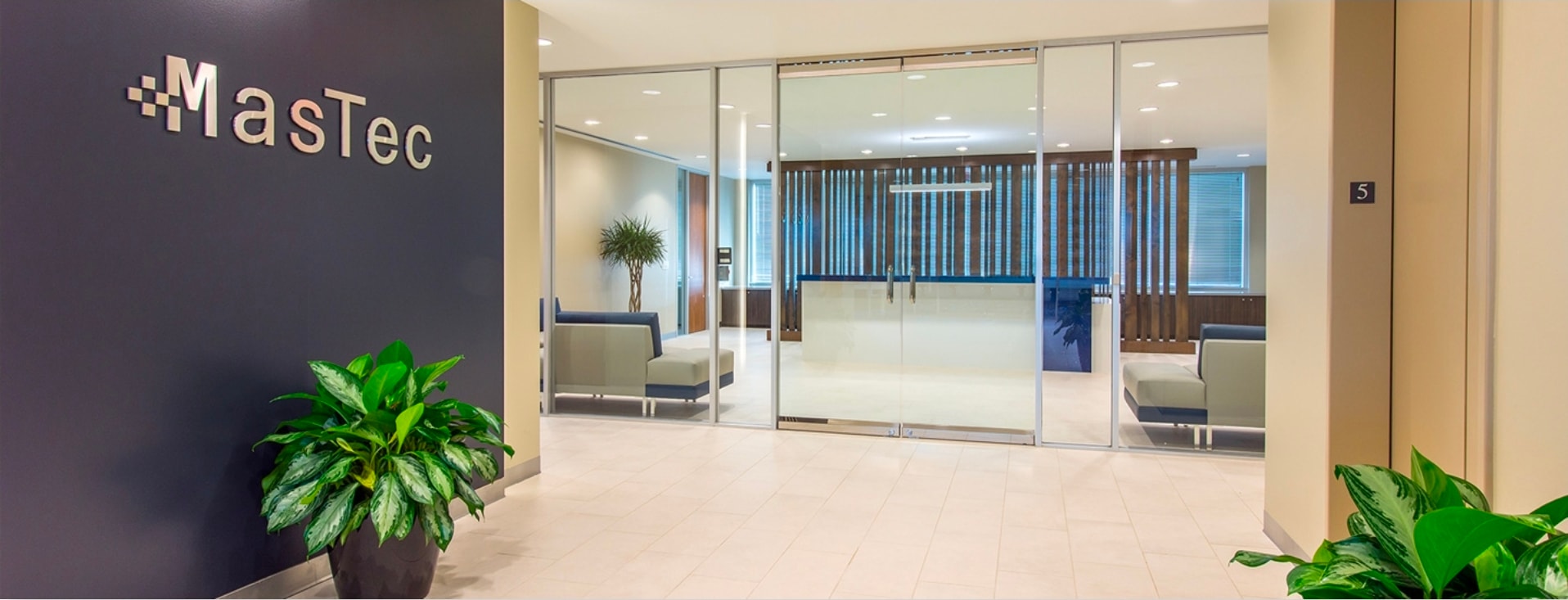
The Target: The Superior Group
The Superior Group (operating as Electrical Specialists Inc.) is a leading specialty electrical and infrastructure contractor with capabilities across six integrated service lines:
- Electrical systems — high-voltage and low-voltage electrical installation, switchgear, distribution, and power systems for mission-critical facilities
- Preconstruction — estimating, design-assist, value engineering, and constructability review for complex infrastructure projects
- Engineering — in-house electrical engineering supporting design-build and EPC delivery models
- Integrated systems — fire alarm, security, structured cabling, AV/IT, and building automation systems
- Modular manufacturing — prefabricated electrical assemblies and modular mechanical-electrical-plumbing (MEP) components manufactured off-site to accelerate field installation
- Maintenance — ongoing operations and maintenance services for data centers, industrial facilities, and critical infrastructure
Superior Group's customer base is concentrated in hyperscale data centers, mission-critical facilities, industrial manufacturing, healthcare, and higher education. The company operates primarily in the Midwest and Southeast United States, with a growing national footprint driven by data center demand.
Strategic Rationale: The AI Data Center Build-Out Wave
The MasTec/Superior Group transaction is a direct product of the AI-driven infrastructure investment cycle reshaping the U.S. construction and engineering sector.
Electricity demand surge. The proliferation of AI training and inference workloads has created an unprecedented demand surge for electrical power and the infrastructure to deliver it. Hyperscale data centers — operated by Microsoft, Google, Amazon, Meta, and a growing cohort of AI-focused operators — require massive electrical infrastructure: high-voltage transmission interconnections, on-site generation and backup power, sophisticated distribution systems, and integrated building systems capable of supporting power densities that were unimaginable five years ago.
Contractor capacity constraints. The scale and speed of the data center build-out has outpaced the capacity of existing specialty electrical contractors. Hyperscale operators are increasingly seeking contractors with the engineering depth, modular manufacturing capability, and workforce scale to deliver large, complex projects on compressed timelines. Superior Group's combination of in-house engineering, modular prefabrication, and integrated systems capabilities positions it as a preferred contractor for exactly this market.
MasTec's strategic positioning. MasTec is one of the largest infrastructure contractors in the United States, with established capabilities in power delivery, pipeline, communications, and clean energy. The acquisition of Superior Group fills a critical gap in MasTec's portfolio: specialty electrical contracting for mission-critical and data center facilities. The combined platform can offer customers a single-source solution from transmission interconnection through facility electrical systems — a capability that few competitors can match at scale.

M&A Structure: Cash-and-Stock Consideration
The cash-and-stock structure of the MasTec/Superior Group transaction raises several legal and financial considerations relevant to M&A practitioners and cross-border investors:
Valuation and EBITDA multiple. At $1.65 billion for a business generating $225–250 million in adjusted EBITDA, the implied transaction multiple is approximately 6.6–7.3x EBITDA — a premium that reflects Superior Group's strategic positioning in the high-growth data center infrastructure market and the scarcity value of its integrated capabilities.
Private company acquisition dynamics. Superior Group is a privately held company (operating as Electrical Specialists Inc.). Private company acquisitions involve different due diligence and representation and warranty dynamics than public company mergers. Key differences include:
- No public financial disclosures — financial due diligence relies on management-prepared financials, audited statements, and quality-of-earnings analysis
- Broader seller representations and warranties, typically backed by a representation and warranty insurance (RWI) policy
- Negotiated indemnification caps and baskets rather than the statutory merger framework applicable to public companies
- Potential earnout provisions tied to post-closing revenue or EBITDA performance
Stock consideration and lock-up. The MasTec stock component of the consideration subjects Superior Group's former owners to MasTec's stock price performance post-closing. Lock-up periods restricting immediate resale are standard in transactions of this size and are a key negotiation point for seller-side advisors.
Earnout mechanics. Given the growth trajectory of Superior Group's data center business, the transaction may include earnout provisions tied to revenue or EBITDA milestones in 2026 and 2027. Earnouts in construction M&A are particularly complex because project revenue recognition, backlog conversion, and margin realization are subject to factors outside management's control — including project delays, change order disputes, and labor availability.
Regulatory Approval: HSR Antitrust
At $1.65 billion, the transaction exceeds the HSR Act filing threshold and requires pre-merger notification to the Federal Trade Commission and the Department of Justice Antitrust Division. The HSR waiting period is 30 days (or 15 days for cash-only transactions), subject to early termination or a second request for additional information.
The antitrust risk profile of this transaction is relatively low. MasTec and Superior Group operate in complementary rather than overlapping markets — MasTec's core capabilities are in power delivery, pipeline, and communications infrastructure, while Superior Group focuses on specialty electrical contracting for mission-critical facilities. The combined entity's market share in any relevant antitrust market is unlikely to raise competitive concerns.
However, the DOJ and FTC have shown increased interest in vertical integration in infrastructure and construction markets. The combined MasTec/Superior Group platform's ability to offer end-to-end services from transmission interconnection through facility electrical systems could attract scrutiny if regulators view the vertical integration as foreclosing competition for data center customers.
Key Legal Issues in Construction M&A
The acquisition of a specialty electrical contractor involves due diligence and post-closing integration considerations that differ materially from financial services or technology M&A:
Construction Backlog Due Diligence
Superior Group's project backlog — the aggregate value of contracted work not yet recognized as revenue — is the primary driver of near-term revenue visibility. Backlog due diligence in construction M&A involves:
- Contract review. Each material contract in the backlog must be reviewed for change-of-control provisions, termination rights, and assignment restrictions. Government and quasi-government customers (utilities, public universities, federal agencies) frequently require consent to assignment or novation upon a change of control.
- Margin analysis. Backlog revenue does not equal backlog profit. Each project's estimated cost-to-complete and projected margin must be independently assessed. Projects with fixed-price or lump-sum contracts are particularly sensitive to cost overruns.
- Claims and disputes. Construction projects routinely generate claims — for additional compensation, schedule extensions, or both. Undisclosed claims or contingent liabilities embedded in the backlog can materially affect post-closing financial performance.
- Bonding and surety. Specialty contractors typically maintain surety bond programs that provide performance and payment bonds to project owners. A change of control can trigger surety review and potentially require the new parent to provide additional indemnification or collateral.
EPC and Design-Build Contracts
Superior Group's engineering and design-build capabilities mean that some of its contracts are structured as EPC (Engineering, Procurement, and Construction) or design-build arrangements, under which the contractor bears responsibility for both design and construction. These contracts carry higher risk than traditional design-bid-build arrangements because:
- Design errors or omissions are the contractor's responsibility
- The contractor bears the risk of design changes required to meet performance specifications
- Professional liability exposure extends beyond the construction phase
Post-closing integration must ensure that Superior Group's professional liability insurance and errors and omissions coverage are maintained and that MasTec's corporate structure does not inadvertently expose the parent to design liability claims.
Labor and Workforce
Specialty electrical contracting is a labor-intensive business. Superior Group's workforce includes licensed electricians, engineers, and skilled tradespeople whose availability and retention are critical to project execution. Key labor considerations in the post-closing integration include:
- Union agreements. If Superior Group's workforce includes union members covered by collective bargaining agreements, the change of control may trigger bargaining obligations under the National Labor Relations Act.
- Prevailing wage compliance. Projects for government or publicly funded customers are subject to Davis-Bacon Act prevailing wage requirements. Compliance with prevailing wage obligations must be verified during due diligence.
- OSHA and safety records. Superior Group's OSHA recordable incident rate (TRIR) and lost-time incident rate (LTIR) are material to its ability to qualify for large project bids. A deterioration in safety metrics post-closing can affect customer relationships and bonding capacity.
Change-of-Control Provisions in Customer Contracts
Large data center operators — Microsoft, Google, Amazon, Meta — typically include change-of-control provisions in their master service agreements and project contracts. These provisions may require:
- Prior written consent from the customer before the change of control becomes effective with respect to the contract
- Notification within a specified period following closing
- The right to terminate the contract if the customer does not consent
Obtaining customer consents is a critical path item in the post-closing integration. Delays in securing consent can disrupt project execution and damage customer relationships that are central to Superior Group's growth trajectory.
Post-Closing Integration Considerations
Modular manufacturing. Superior Group's modular manufacturing capability — prefabricated electrical assemblies and MEP modules — is a key differentiator that MasTec must preserve and scale post-closing. Integration of manufacturing operations with MasTec's broader supply chain and procurement platform can create cost efficiencies, but must be managed carefully to avoid disrupting existing production schedules.
Brand and customer relationships. Superior Group has built strong customer relationships under its own brand. MasTec must decide whether to maintain the Superior Group brand as a distinct operating unit or integrate it into MasTec's broader brand architecture. In specialty contracting, brand recognition and customer trust are significant competitive assets.
Geographic expansion. Superior Group's Midwest and Southeast footprint complements MasTec's national presence. The combined platform can pursue data center projects in markets where neither company previously had significant specialty electrical capabilities.
Implications for Turkish Companies and Investors
The MasTec/Superior Group transaction illustrates several themes relevant to Turkish companies and investors evaluating U.S. infrastructure and construction sector opportunities:
Data center infrastructure as an investment theme. The AI-driven data center build-out is creating sustained demand for specialty electrical contractors, power delivery infrastructure, and mission-critical facility services. Turkish construction and engineering companies with relevant capabilities — electrical systems, MEP, modular construction — should evaluate whether the U.S. data center market represents a viable expansion opportunity.
EPC and design-build capabilities command premium valuations. The 6.6–7.3x EBITDA multiple paid for Superior Group reflects the premium that strategic buyers are willing to pay for integrated engineering and construction capabilities in high-growth markets. Turkish contractors with genuine EPC or design-build capabilities in power and critical infrastructure are well-positioned to attract premium valuations in U.S. M&A processes.
Construction M&A due diligence is specialized. The backlog, bonding, labor, and contract assignment issues that arise in construction M&A require specialized legal and financial due diligence that differs materially from other sectors. Turkish companies evaluating U.S. construction acquisitions should engage advisors with specific construction M&A experience.
Change-of-control risk in government and quasi-government contracts. Turkish acquirers of U.S. contractors with government or utility customer relationships must carefully assess change-of-control provisions in those contracts. Government customers may be reluctant to consent to assignment to a foreign-controlled entity, and the loss of key contracts post-closing can materially impair the value of the acquisition.
HSR filing and antitrust clearance. Any acquisition of a U.S. business exceeding the HSR threshold requires pre-merger notification and a waiting period. Turkish acquirers should factor the HSR timeline into their transaction planning and engage U.S. antitrust counsel early in the process.
Key Takeaways
The MasTec/Superior Group transaction illustrates the legal and commercial complexity of construction sector M&A in the AI infrastructure era:
- Backlog due diligence is the most critical financial due diligence workstream — margin analysis, claims review, and bonding capacity assessment must be completed before signing.
- Change-of-control provisions in customer contracts are a critical path item — customer consent processes must begin immediately after signing to avoid post-closing disruption.
- Labor and workforce considerations — union agreements, prevailing wage compliance, and safety records — are material to both transaction value and post-closing integration.
- EPC and design-build contracts carry professional liability exposure that must be addressed in the transaction's insurance and indemnification structure.
- HSR antitrust clearance is a standard closing condition for transactions of this size — the 30-day waiting period should be factored into the closing timeline.
ULF New York advises Turkish companies and investors on U.S. M&A transactions, construction law, government contracts, and cross-border regulatory matters. This article is for informational purposes only and does not constitute legal advice.
Explore Topics
Written by
ULF New York Editorial Team
ULF New York legal team — New York-based attorneys advising Turkish companies and investors on U.S. market entry, corporate law, real estate, and international trade.